About / Feedback
Who am I
I have built large-scale data systems since 2000, including AdSense, BigQuery, and the infrastructure behind Google Apps and Gmail. CS145 draws on systems I shipped, operated, or watched fail and succeed at scale.
I designed this course around two questions:
- How do you keep a course practical when the data stack keeps changing? In 25 years of building systems, I have watched workloads and hardware evolve while the core principles endure. Cloud computing and consumer apps drove one wave of innovation. Cheap RAM, SSDs, and now GPUs rewrote the cost model. Agents are driving the next. My job is to teach the fundamentals in the context of where the industry is going.
- How to reach students who learn differently? After eight years of teaching, I know some students use slides, some read notes, some watch videos at 2x, some need accessible content, and some learn by running code. So I build the course like an app to support multiple journeys.
My skills
- I curate the core content and keep it current, based on where the industry is heading.
- I am also pretty terrible at drawing pictures and animations. I write code instead.
How I built the app
This section is a worked example of what the AI policy asks of you on projects: ship with AI, own the result. Here is what that looked like for the course itself.
I want all the pages, PSETs and videos to cross-link to each other, so it runs as a full RAG system with full text search. I treat this as a data and content problem, plus a git problem. Hand-producing the slides, the notes, the video and the colabs makes a course stale by week four.
I keep one primary content source per page, five render targets, everything under version control.
Claude draws each topic as an animated SVG and I iterate on it (custom insult prompts) until we get it right. ElevenLabs reads my scripts for TTS. We need to solve four problems to keep the five views in step:
- Make a reveal land on the word that names it. Each step pins to a verbatim narration phrase, not a timer. Reword the sentence and the reveal follows it.
- Walk code in step with the voice. The same trick, finer grained: a scene names its tokens, and the pipeline lights them inside the code block as the narration reaches them.
- Stop five views from drifting. Every scene binds to a section of the page, and the video is generated from that content, so one edit moves all five.
- Catch a cue that stops matching. It fails silently: the animation falls back to an even spread and the video still looks fine. So the build re-reads the rendered frames, measures ink, and fails any content-heavy scene that comes out near-blank.
Accessible Content. The same source produces a fifth view. Every figure carries its own description, and where a figure draws rows, its data is written out as a real table, checked against the drawing so the two cannot drift. A reader switches to it with the Accessible button on any lesson page, and the standard page is unchanged.
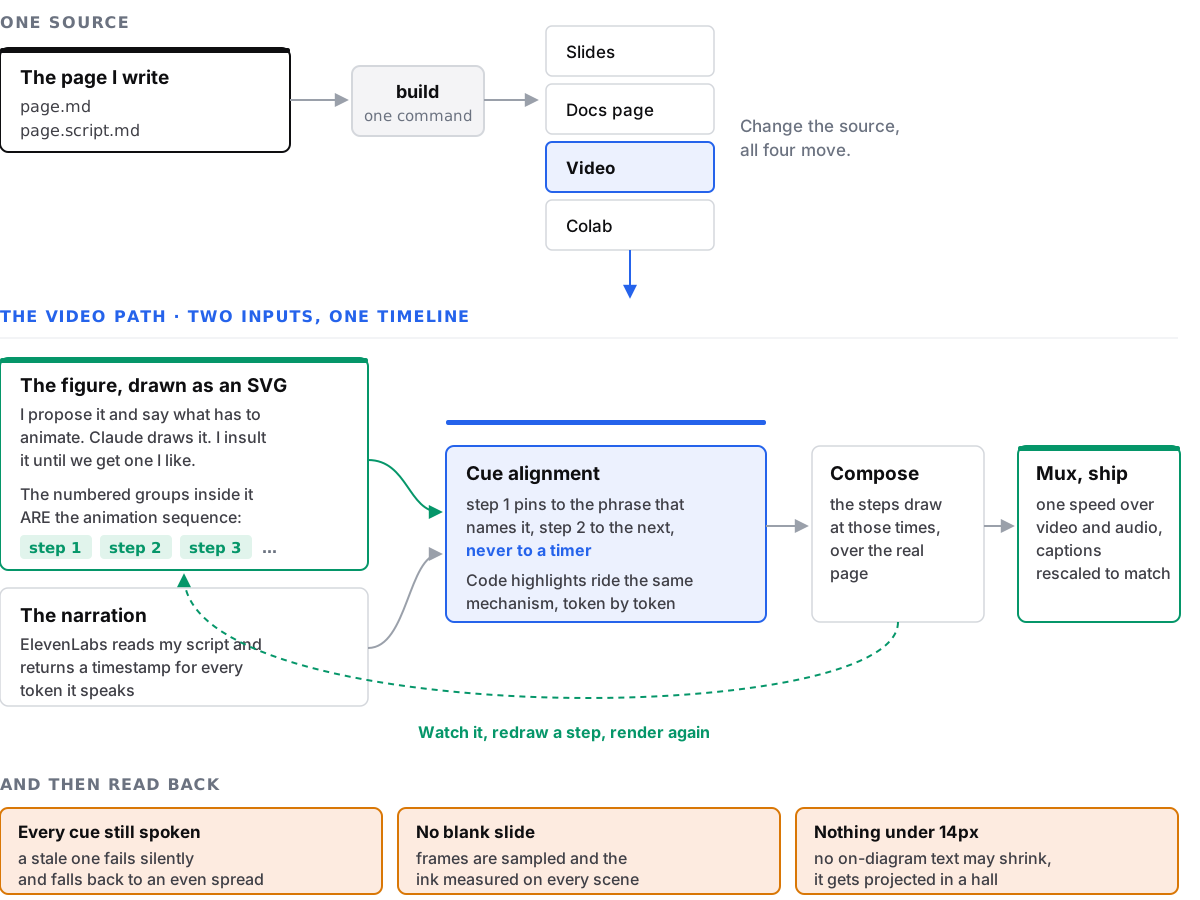 Figure: How one source page becomes slides, notes, a video, a colab and accessible contentA pipeline in three bands. At the top, one markdown page and one narration script are the single source, and the build renders them into five targets: slides, the docs page, a video, the colab, and accessible content: every figure described in text, with its data as a table where the figure draws rows. The middle band expands the video path and shows its two inputs converging. The animated SVG for the topic is authored with numbered data-step groups, and those groups are the animation sequence. The narration comes back from ElevenLabs with a timestamp for every token. Cue alignment marries them, pinning step one to the phrase that names it rather than to a timer. The composer draws the steps at those times, and a final mux applies one uniform speed and rescales the captions. An arrow loops back from the composer to the SVG, because redrawing a step and re-rendering is the working loop. The bottom band lists the checks that read the output back: every cue still spoken, no content-heavy scene near blank, and no on-diagram text under fourteen pixels.
The middle band is where the work is. The figure and the narration are two inputs to one timeline, and the numbered groups inside the SVG are the animation sequence, so redrawing a step is how the video changes. The accessible view comes off the same source: each figure's description and, where it draws rows, its data as a table.
Feedback
My engineering bet is to make this timely and current. If you find bugs or content drifts, please let me know in the feedback link at the top of this page. Thanks.